Editor of the Future
Editor of the Future
The editor had started to feel like software: tons of tools in a random order, mirroring their chronological implementation. I led a rethink of how you actually edit a photo, so editing would feel contextual to your intent, rather than operating a menu.
Full FigmaThe editor in its conventional way worked, but it felt like the IA of it doesn't help our users to get to their intents. So we asked: if we redesigned Facetune today, with all we know about mobile, AI, and years of editing, would we do it the same way?
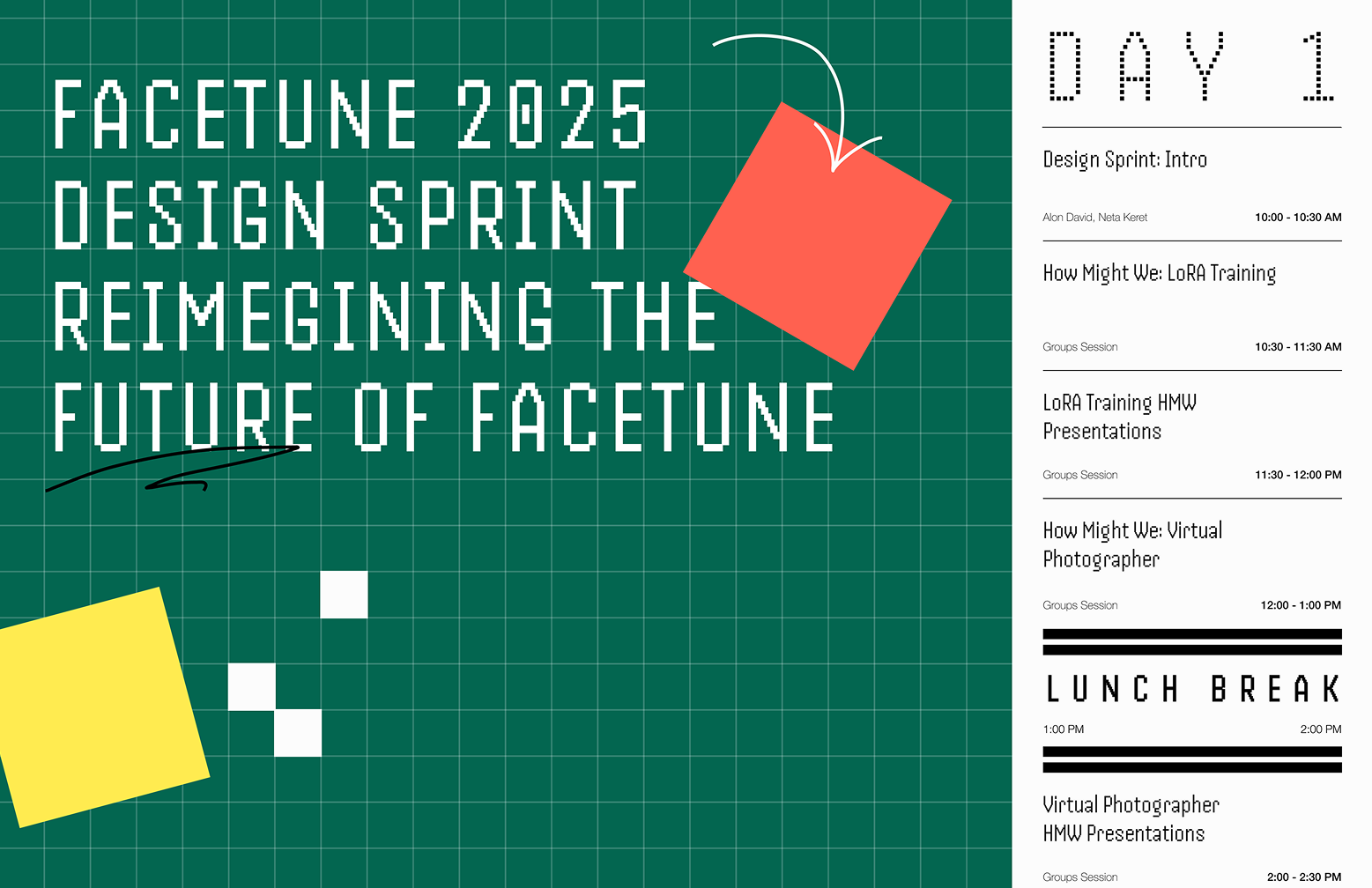
First, we initiated a three-day Design Sprint, aimed at reimagining Facetune's editor through our four guiding principles:
- Discoverability
- Simplicity
- Richness
- Personalization
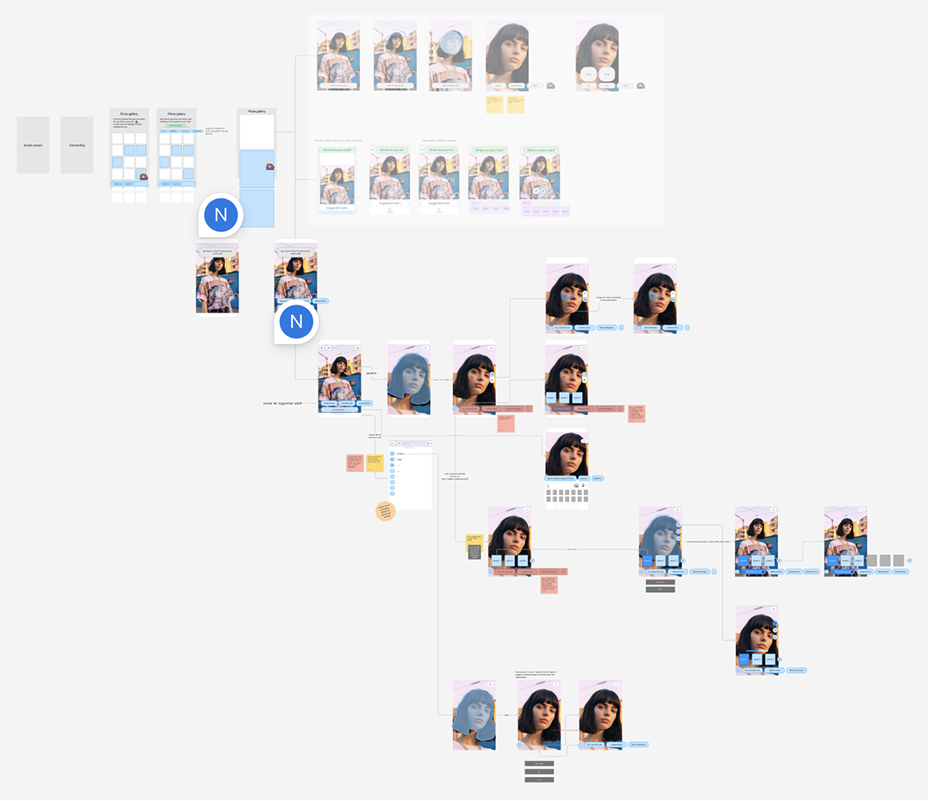
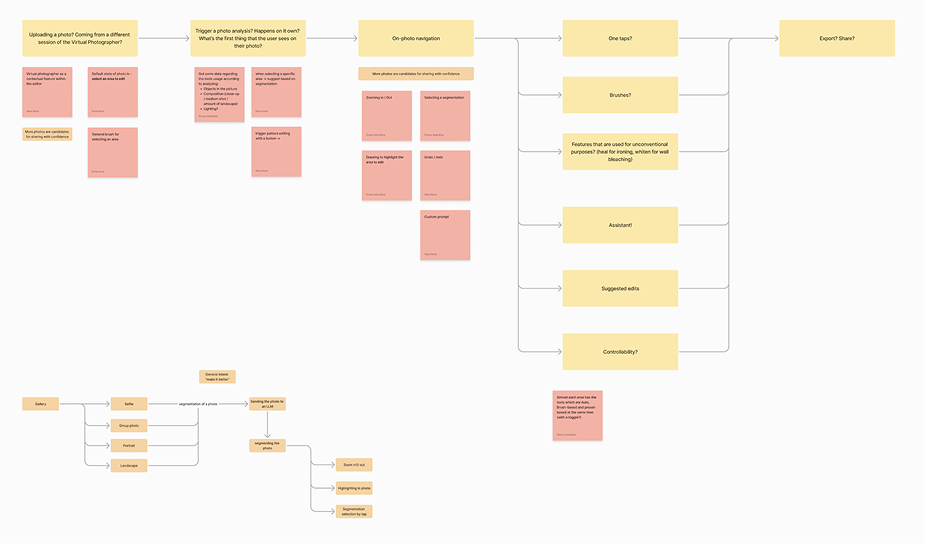
January, 2025
The standalone version, the purest form of our vision, didn't work out. Many users felt lost with the new way to navigate the editor, which hurt our business metrics. On the other hand, the integrated version kept everything steady. Those who tried the new interaction found it useful, but they were also the ones willing to dig deeper to find their tools. Using the photo feature was a hit, but making Genie the main editor was a miss.
The bigger outcome was the lesson. The best editing experience doesn't make powerful tools easier to operate. It makes the distance between intention and result smaller. And when you test that at scale, the data tells you exactly where the line is.